
Public Information on Urinary Incontinence
What is continence, and how does the bladder work?
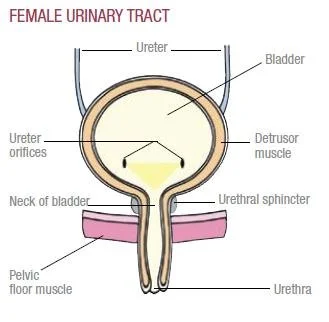
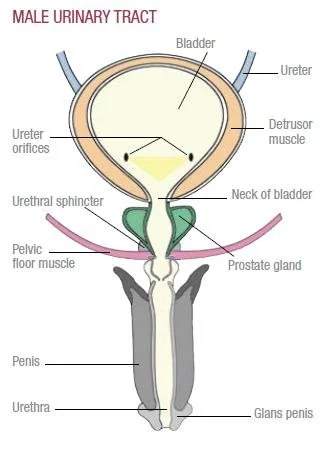
Continence means being able to control your bladder and bowels, so you do not leak urine or stool. It relies on healthy muscles, nerves, and organs working together. The bladder is a hollow muscle that stores urine made by the kidneys. As it fills, the bladder slowly stretches and sends signals to the brain to let you know it is getting full. When it is time to urinate, the brain tells the bladder to squeeze and push the urine out, while the muscles around the urine tube relax so urine can pass out of the body. The urethra is the tube that carries urine from the bladder to the outside.
The pelvic floor muscles support the bladder, bowel, and uterus and help keep these organs in place. These muscles also help control when you empty your bladder and bowels by tightening and relaxing at the right times.
What is Urinary Incontinence?
What are common causes of urinary incontinence?
Who can help me with urinary incontinence?
When should I see a healthcare provider?
What questions should I ask my healthcare provider?
How can I prevent urinary incontinence?
How is urinary incontinence assessed?
How is urinary incontinence treated?
Daily Tips for Managing Urinary Incontinence
Myths vs. Facts about Urinary Incontinence
Urinary incontinence is the unintentional leakage of urine, whether occasional or more frequent. It can occur at any age and significantly affects a person's quality of life. Urinary incontinence is not a disease; it is a symptom that indicates an underlying issue—and in most cases, it can be effectively treated or significantly improved.
What are the types of urinary incontinence?
1. Stress Urinary Incontinence: Leakage occurs during coughing, sneezing, laughing, or physical activity and is more common in women after childbirth or menopause.
2. Overactive bladder: A condition marked by a strong, sudden urge to urinate, which may sometimes lead to leakage. People with an overactive bladder often need to visit the restroom more frequently, both during the day and at night. Symptoms can be triggered by factors such as bladder irritation, caffeine intake, stress, or other urinary issues. These symptoms may occur with or without leakage. They can arise even in the absence of a urinary tract infection or other apparent causes.
Common symptoms include:
Urgency: A compelling desire to pass urine, which is difficult to delay.
Urgency urinary incontinence: This is when urine leaks involuntarily, often accompanied by a strong, sudden urge to urinate.
Frequency: Needing to urinate too often during waking hours
Nocturia: Waking at night to urinate.
3. Mixed Urinary Incontinence: A combination of stress and urinary incontinence symptoms.
4. Overflow Urinary Incontinence: Frequent dribbling due to incomplete bladder emptying and is more common in men with prostate enlargement.
5. Functional Urinary Incontinence: Symptoms occur because of difficulty reaching the toilet in time, e.g., mobility issues and cognitive conditions.
Weak pelvic floor muscles
Pregnancy, childbirth, and menopause
Prostate enlargement
Urinary Tract Infection
Certain medications
Constipation
Obesity
Diabetes or neurological conditions
Chronic cough or smoking
Increasing age is a potential risk factor, but urinary incontinence is not an inevitable part of aging
Several healthcare professionals can help manage urinary incontinence, depending on the type and severity of your symptoms:
Primary Care Provider (Family Physician or Nurse Practitioner)
Your Primary Care Provider is usually the first point of contact. They can perform an initial assessment, rule out infections or medication-related causes, and refer you to specialists if needed.
Pelvic Health Physiotherapist
A specialist in assessing and training pelvic floor muscles, and often provides first-line, evidence-based treatment for stress, urge, and mixed incontinence. They offer exercises, bladder training, and lifestyle strategies.
Nurse Continence Advisor / Continence Nurse
Provides bladder training, lifestyle advice, and guidance on continence products. May be available in community programs, seniors' clinics, and continence or urology clinics.
Occupational Therapist (OT)
Help improve bathroom accessibility and mobility, especially for people who have difficulty reaching the toilet in time. They may recommend adaptive equipment or home modifications.
Dietitian
Supports dietary changes that influence bladder function, including hydration, caffeine intake, and constipation management.
Mental Health Professional (Psychologist / Counselor)
Urinary incontinence can affect emotional well-being and quality of life. If needed, your GP can refer you to mental health support to help manage anxiety, embarrassment, or social withdrawal.
Urologist
A Physician specializing in bladder and urinary tract conditions in both men and women. They manage complex cases and prostate-related issues and provide medical or surgical treatments if required.
Urogynecologist
A physician with training in both urology and gynecology, specializing in pelvic floor disorders. Helps women with prolapse, stress urinary incontinence, and complex pelvic issues and can perform surgical procedures when appropriate.
Gynecologist
A physician specialist who can help women with hormonal changes, menopause-related symptoms, or pelvic floor issues. Can assess pelvic organ prolapse and other gynecological causes of urinary incontinence and provide surgical intervention when appropriate.
Geriatrician (for older adults)
Physician who specializes in health issues related to aging. They address mobility concerns, memory problems, and medication effects that may contribute to urinary incontinence.
Ongoing or worsening leakage
Sudden onset of urinary incontinence
Burning or pain when urinating
Blood in urine
Recurrent urinary tract infection
Difficulty emptying the bladder
Why am I leaking urine?
What tests do I need?
What treatment do you recommend
What are the pros and cons of the treatment?
How long will this problem last?
What can I do in my daily life to help?
Maintain a healthy weight.
Start pelvic floor muscles exercises early (during pregnancy and after childbirth).
Manage menopause with medical advice if required.
Stay active and treat constipation early.
Taking a medical history
Keep a bladder diary (a record of your fluid intake and urination)
Physical examination
Urine analysis test
Lifestyle modifications such as reducing intake of bladder irritants (e.g., caffeine, carbonated beverages), are recommended, as these may worsen urgency and frequency.
Pelvic Health Physiotherapy
Medications
Surgery or other procedures
Use the toilet every 3–4 hours.
Double voiding (try to empty bladder fully)
Wear pads if needed (short-term only).
Strengthen the pelvic floor muscles regularly.
Avoid heavy lifting without support.
Myth: Urinary incontinence is a common issue that often occurs as people age.
Fact: It is common but not normal, and treatments are effective.
Myth: Only women get urinary incontinence.
Fact: Men often develop urinary incontinence, especially with prostate issues or after prostate surgery.
Myth: Surgery is the only treatment.
Fact: Most people improve with physiotherapy and lifestyle changes.
Key message: Simple lifestyle changes and pelvic floor muscle exercises can significantly improve symptoms for many people.
Additional Resources:
For more information on treatment options and a patient decision aid, see the World Federation on Incontinence and Pelvic Floor Disorders “Support in Continence platform” and decision aid guide for Urinary Incontinence and Overactive Bladder options
•https://www.supportincontinence.org/
•https://www.supportincontinence.org/your-guides-to-oab-and-fi-treatment-choices/
References:
https://my.clevelandclinic.org/health/diseases/17596-urinary-incontinence
https://www.ics.org/committees/standardisation/terminologydiscussions
Dumoulin, Chantale et al. “Pelvic floor muscle training versus no treatment, or inactive control treatments, for urinary incontinence in women.” The Cochrane database of systematic reviews vol. 10,10 CD005654. 4 Oct. 2018, doi: 10.1002/14651858.CD005654.pub4